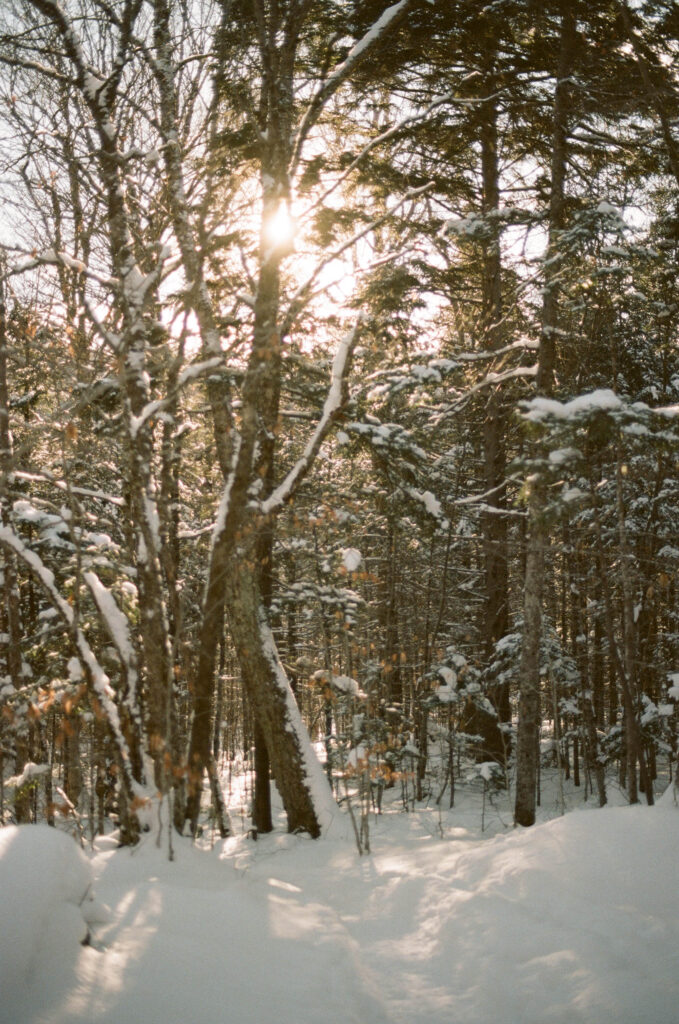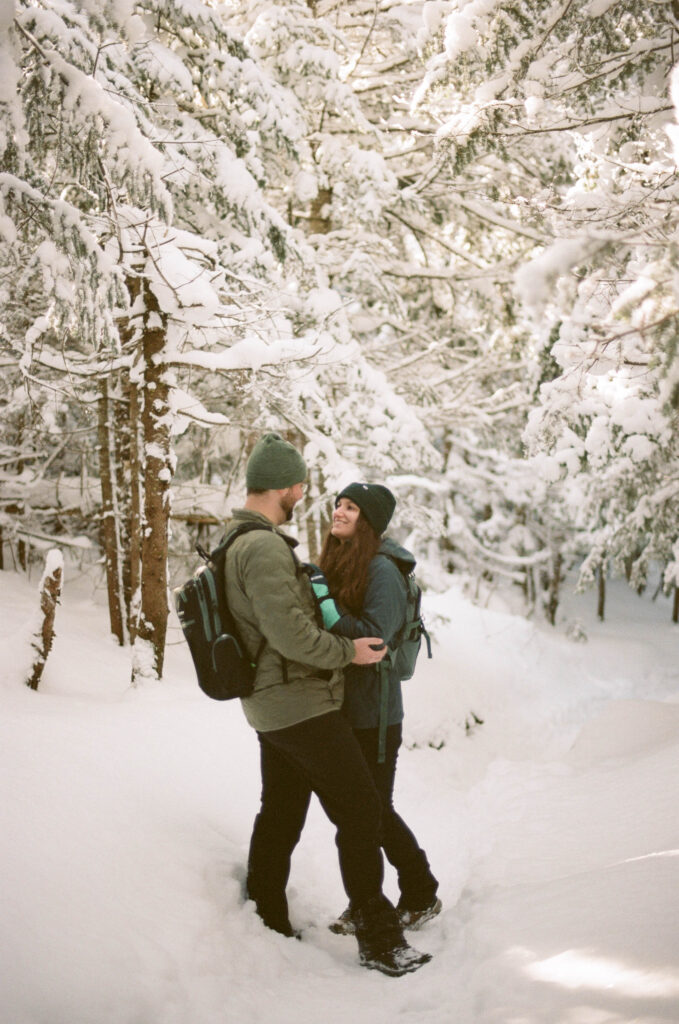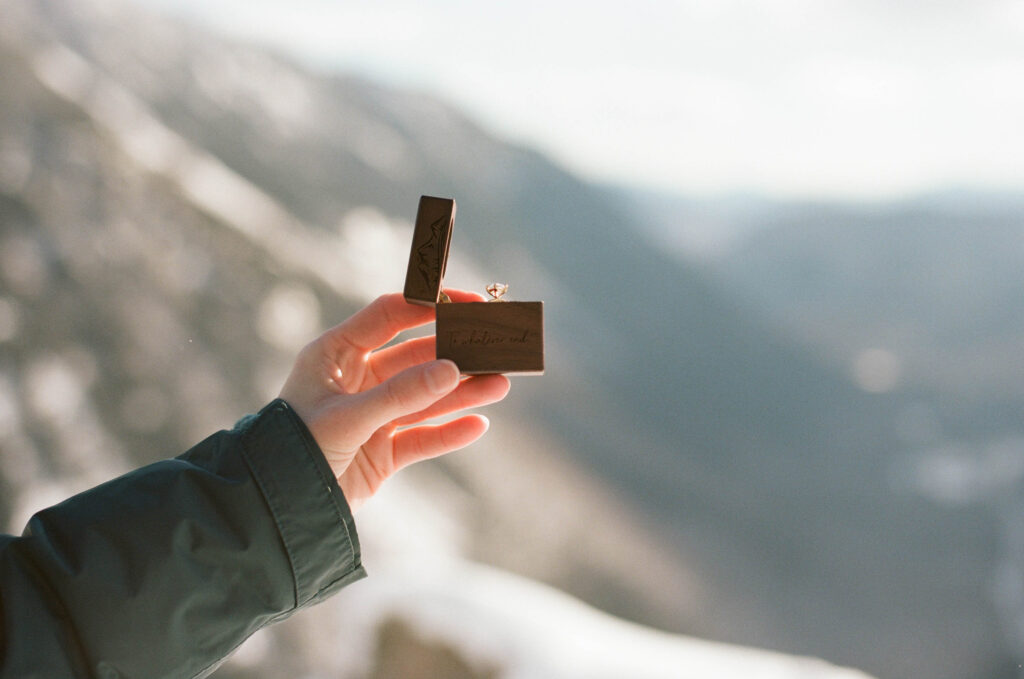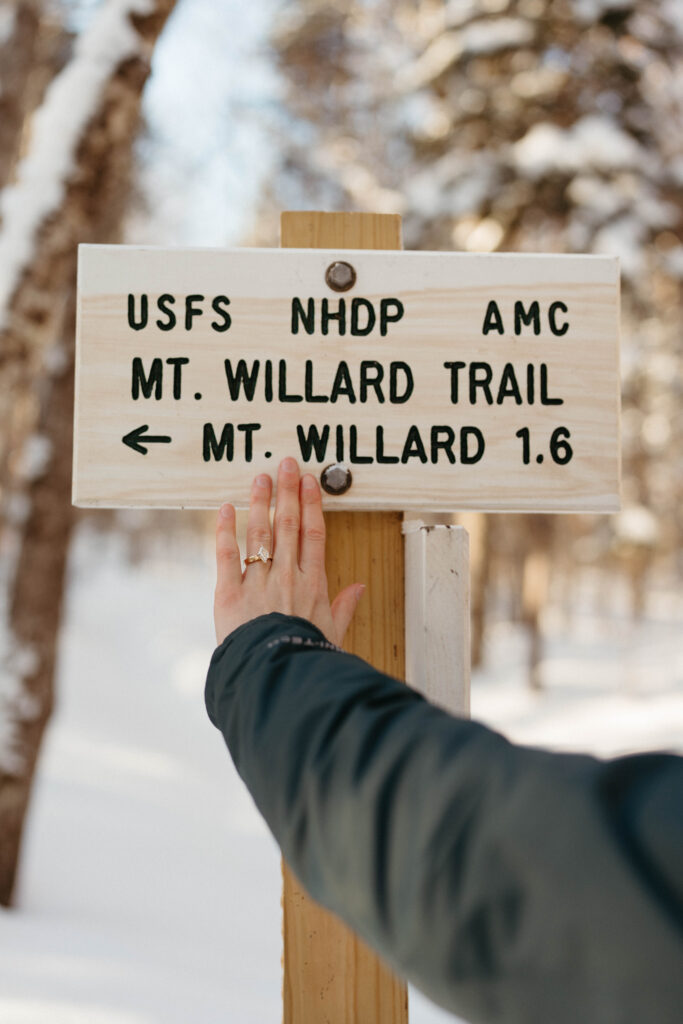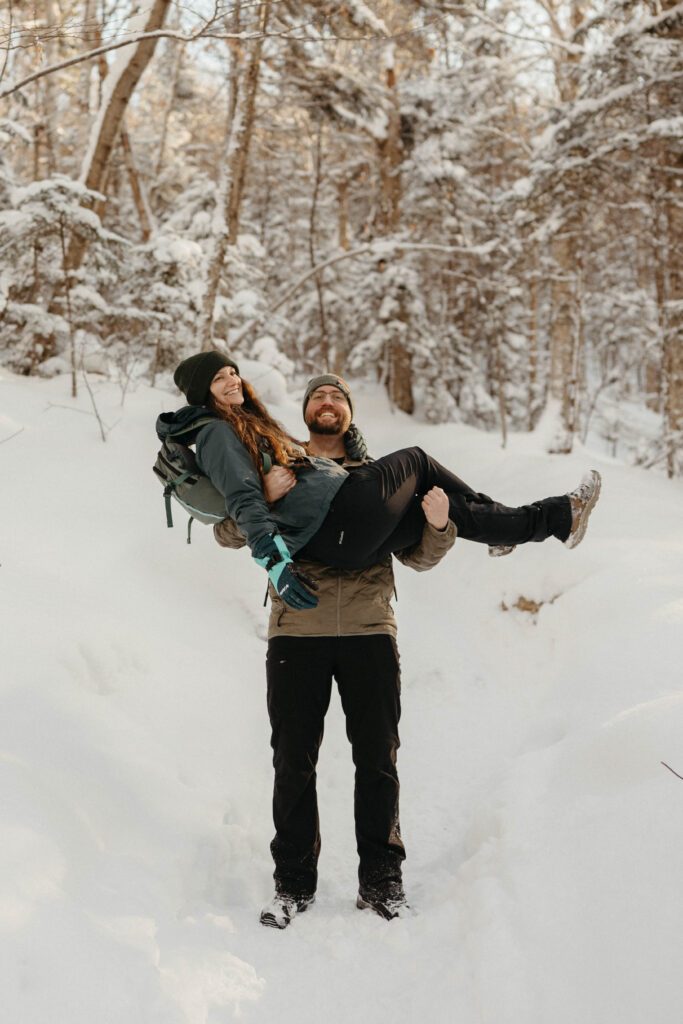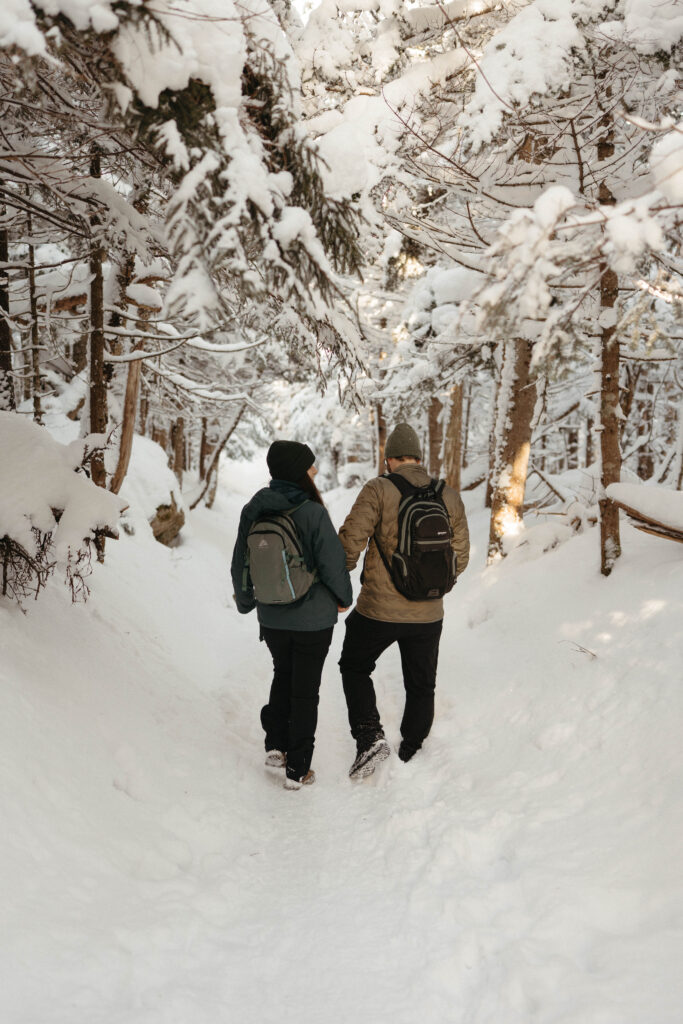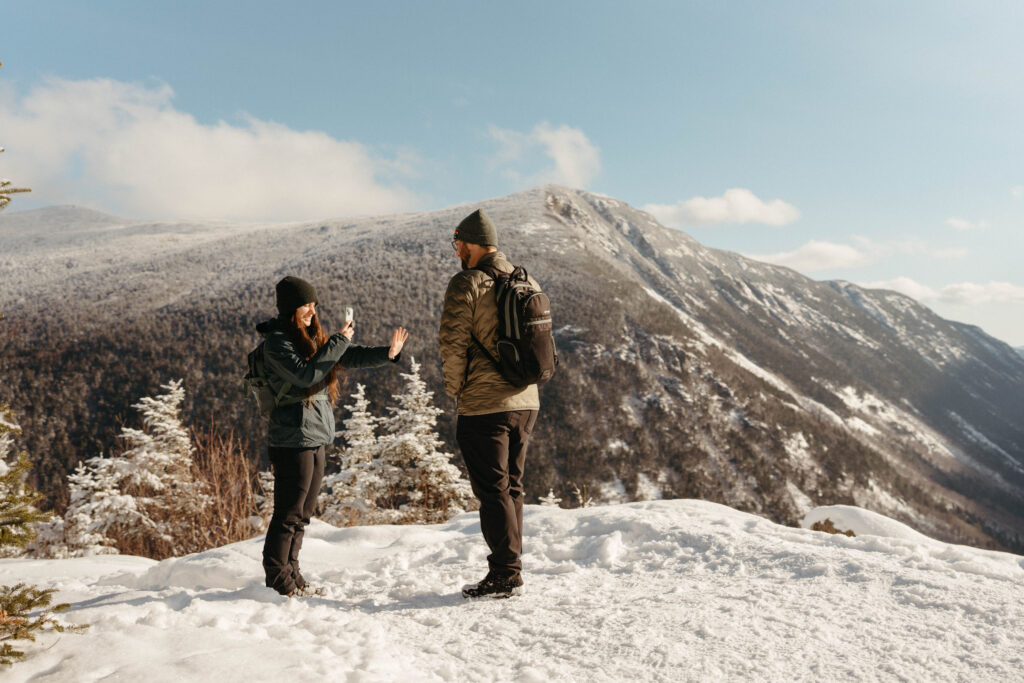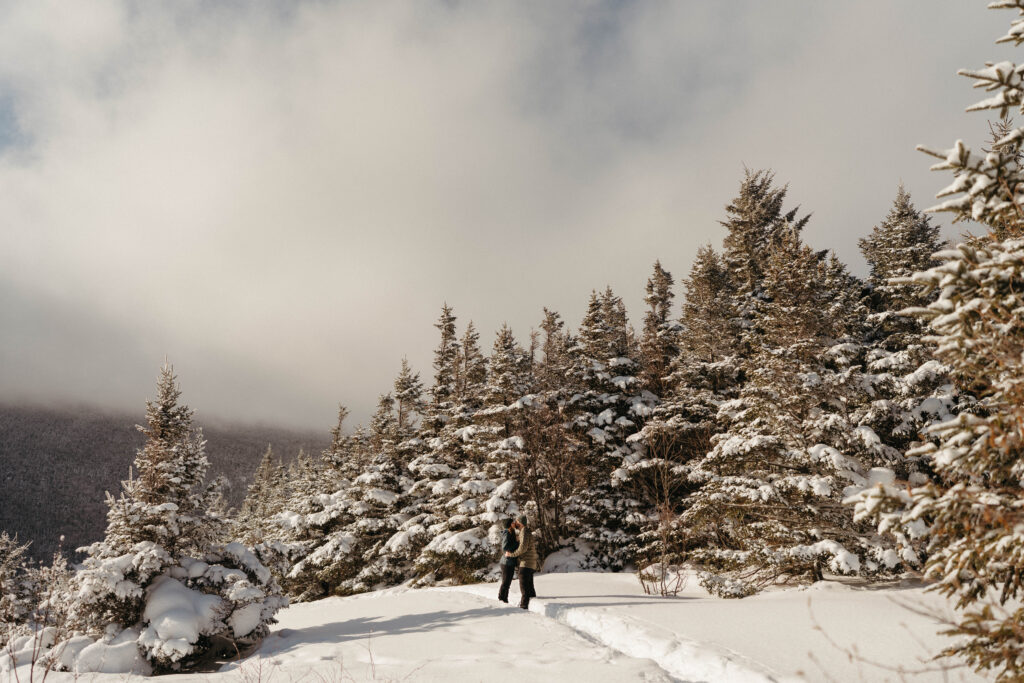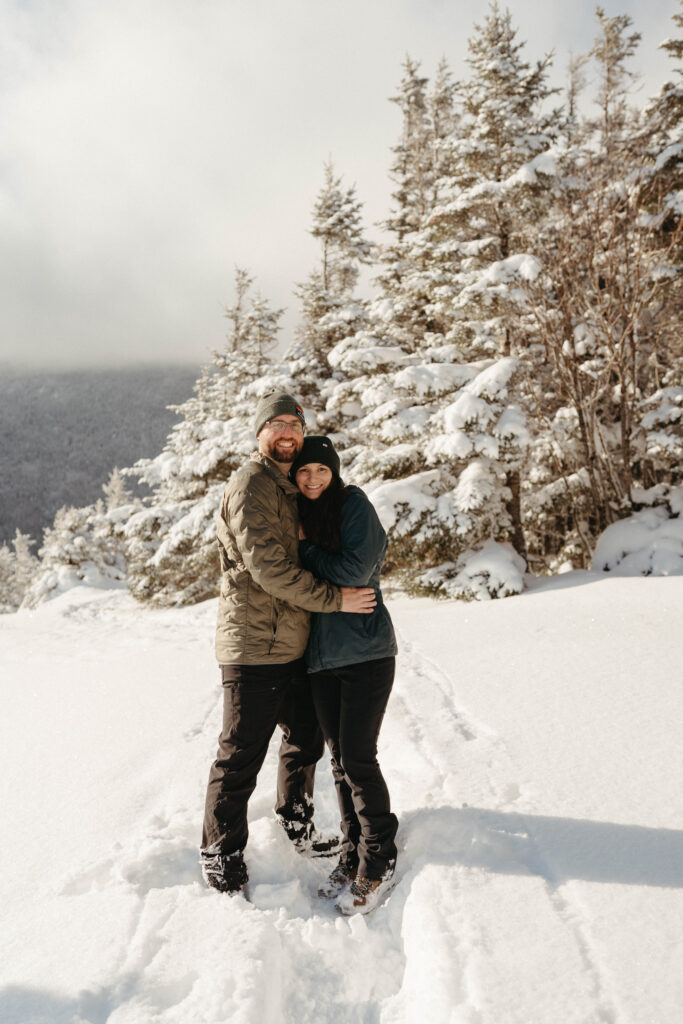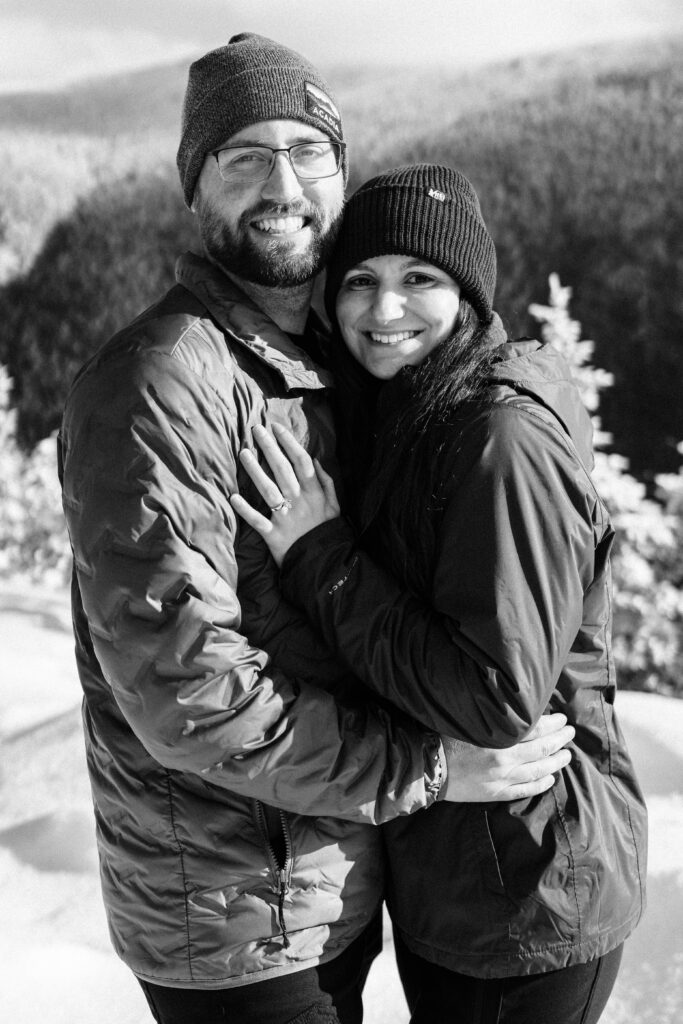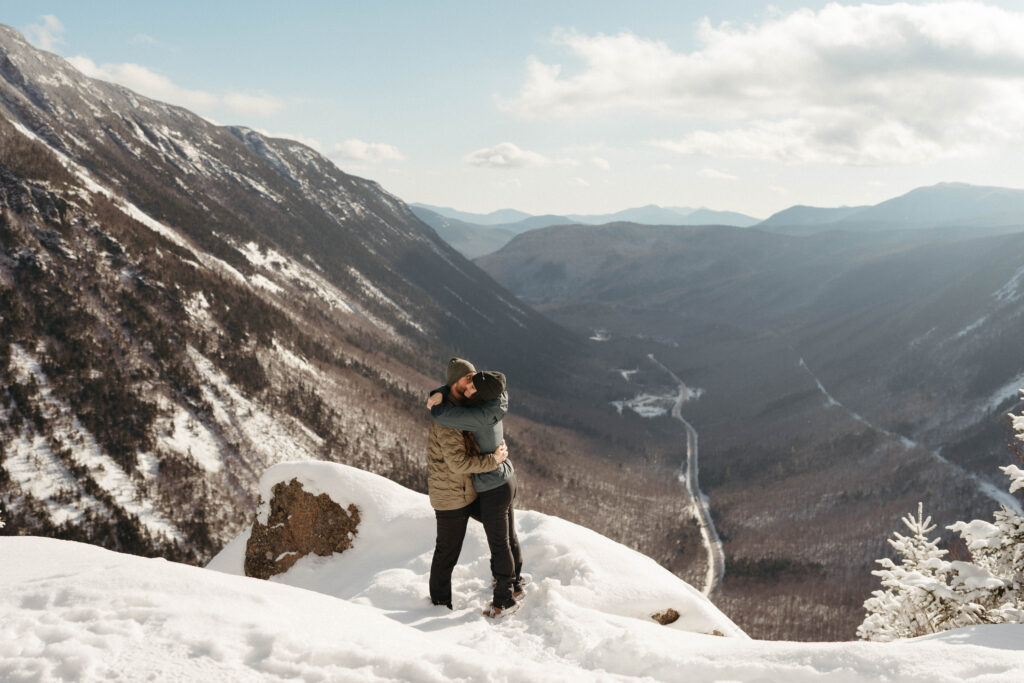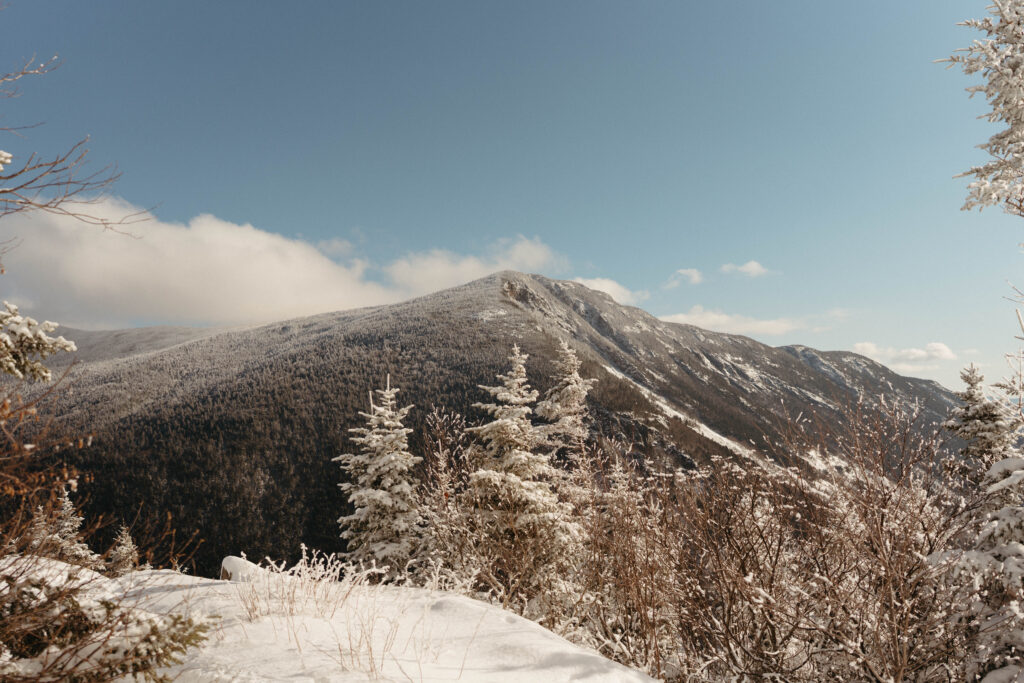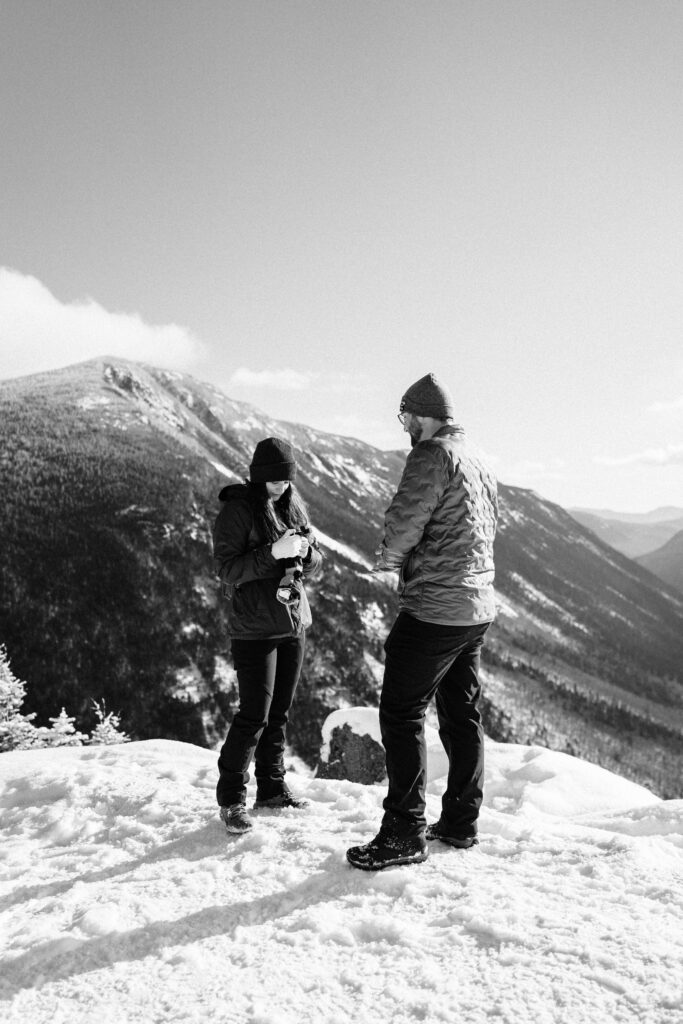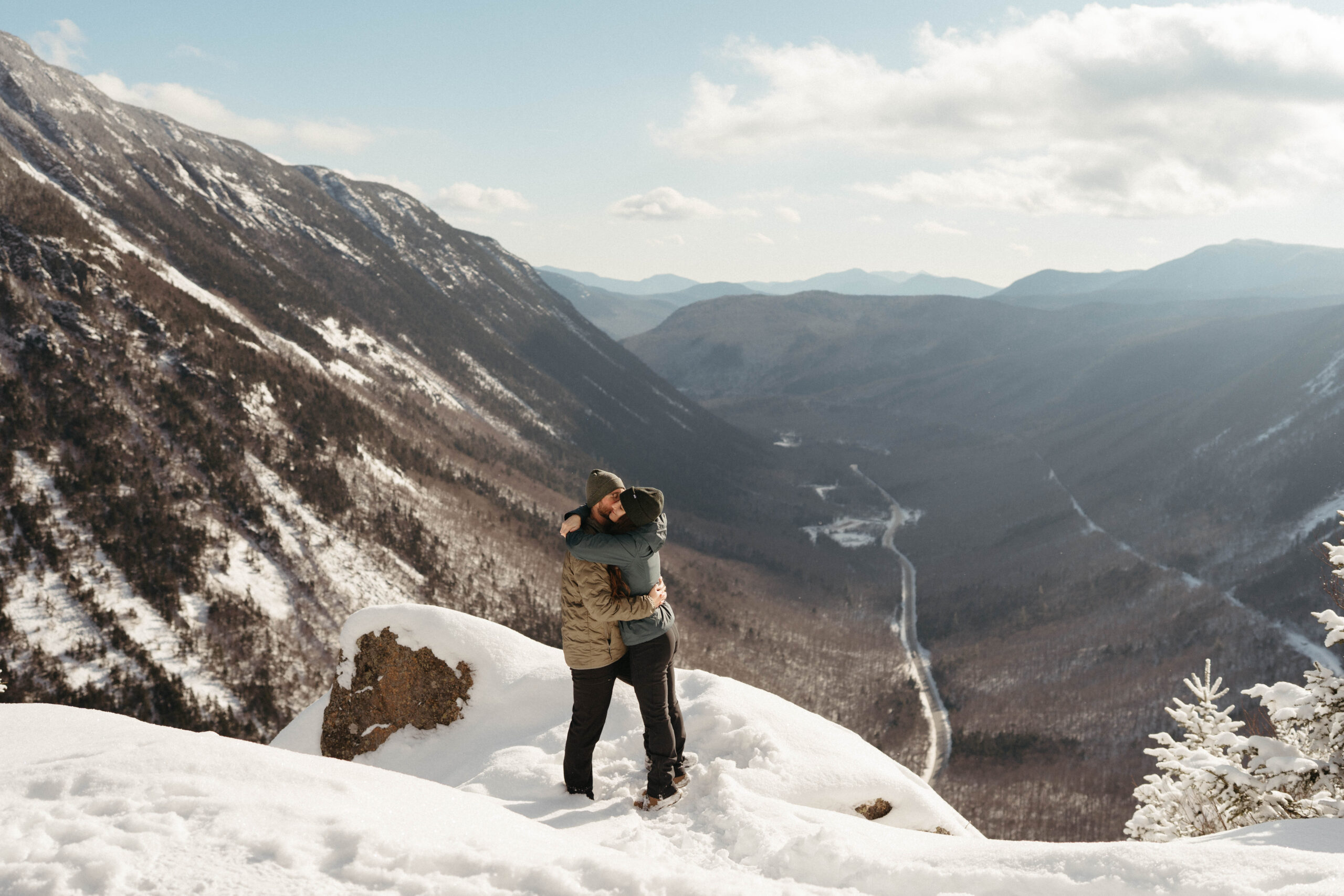

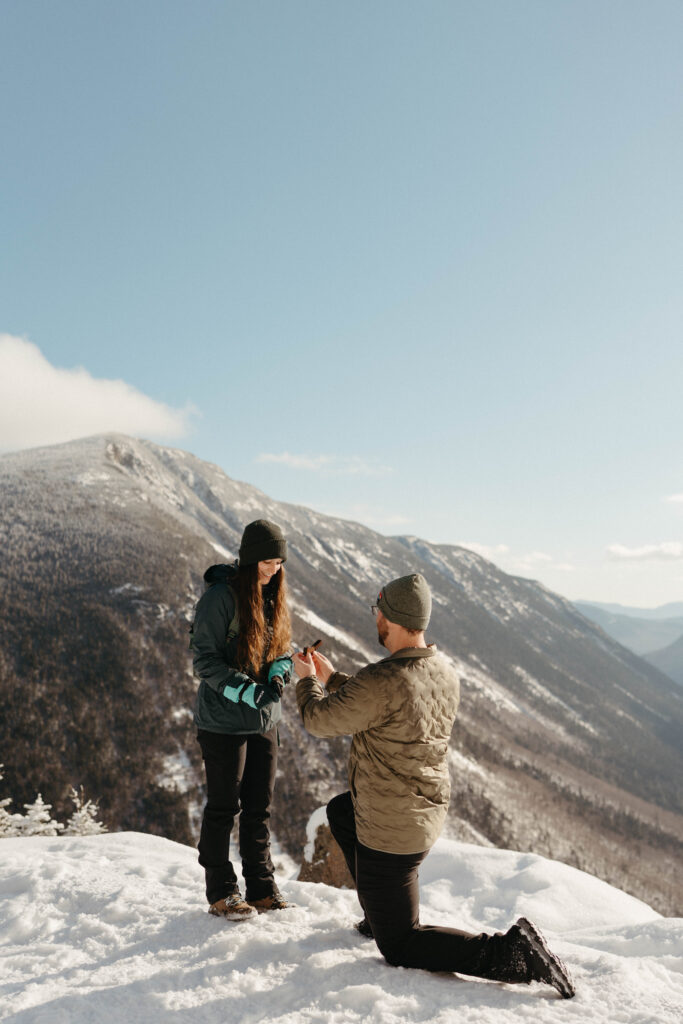
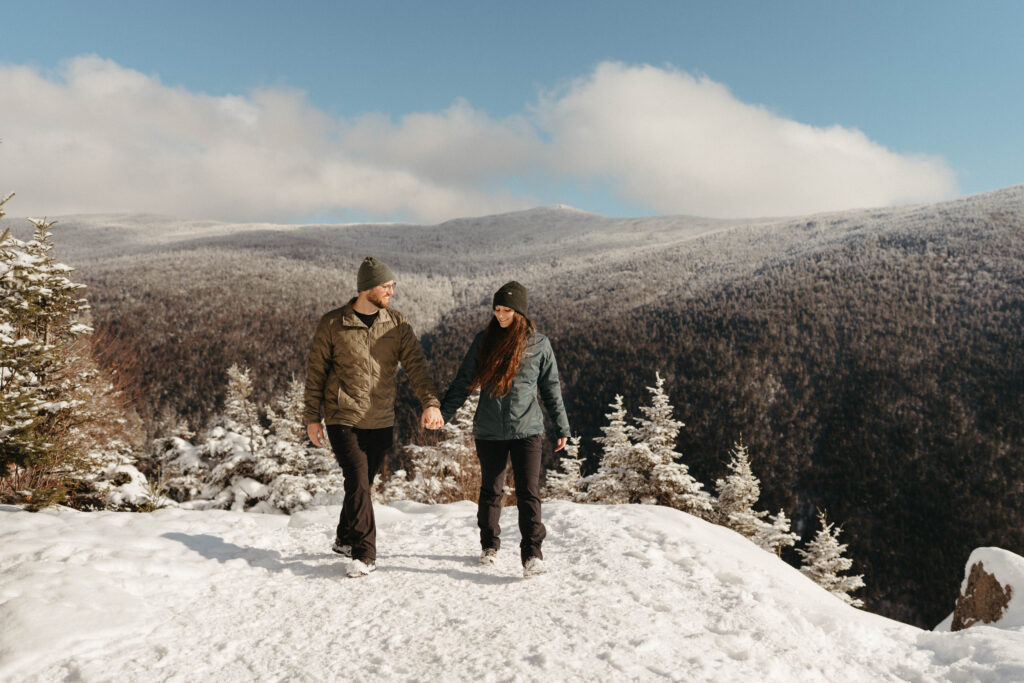
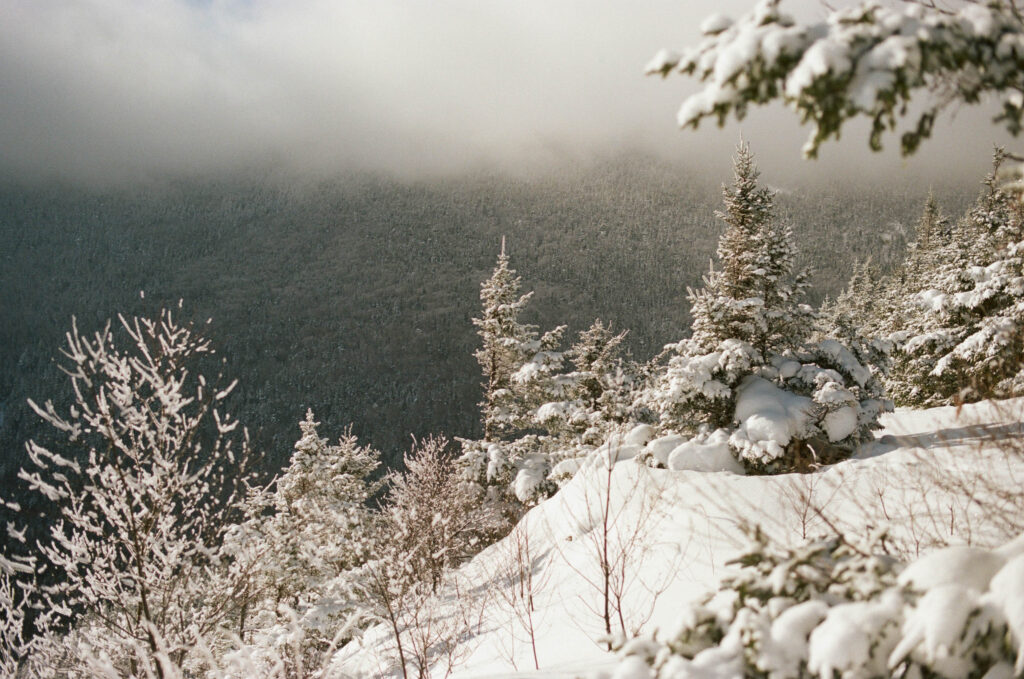
Brooke and Stephen’s proposal on Mount Willard was full of winter wonderland magic. On my hike up, it looked like Willard was going to disappear into a cloud. By the time I reached the summit, the skies had cleared, the wind had died down, and everything felt picture-perfect!
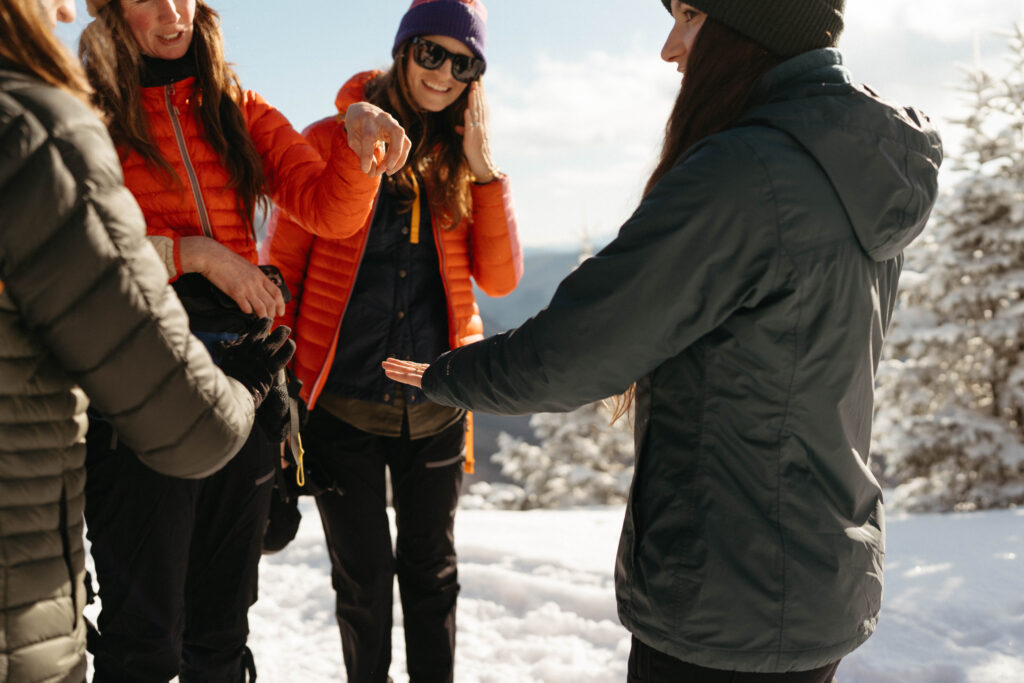
A kind gentleman was sitting in the spot, enjoying a summit coffee. He graciously agreed to move in exchange for a professional photo of himself, then proceeded to spread the news of the proposal on his way down the mountain. We were met with plenty of congratulations and more than a few “show us the ring!” moments on the hike back.
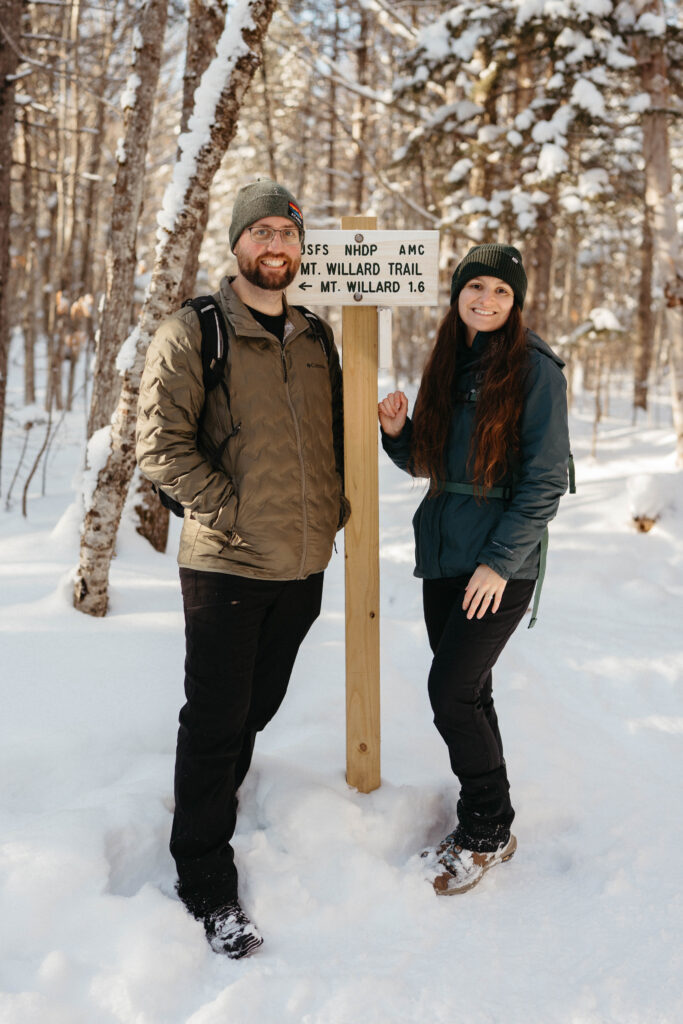
Originally, Brooke and Stephen’s proposal was planned for a different day. As the date got closer, the forecast started calling for extreme cold and strong winds at elevation. Even though Mount Willard is a relatively short hike, winter conditions in the White Mountains can change quickly, and harsh weather can turn a simple plan into a miserable or unsafe experience!
Why Mount Willard Is Perfect for a Winter Proposal
Mount Willard is one of the most rewarding short hikes in the White Mountains, especially in the winter. The trail is relatively straightforward, the elevation gain is manageable, and the view at the top feels far bigger than the effort it takes to get there.
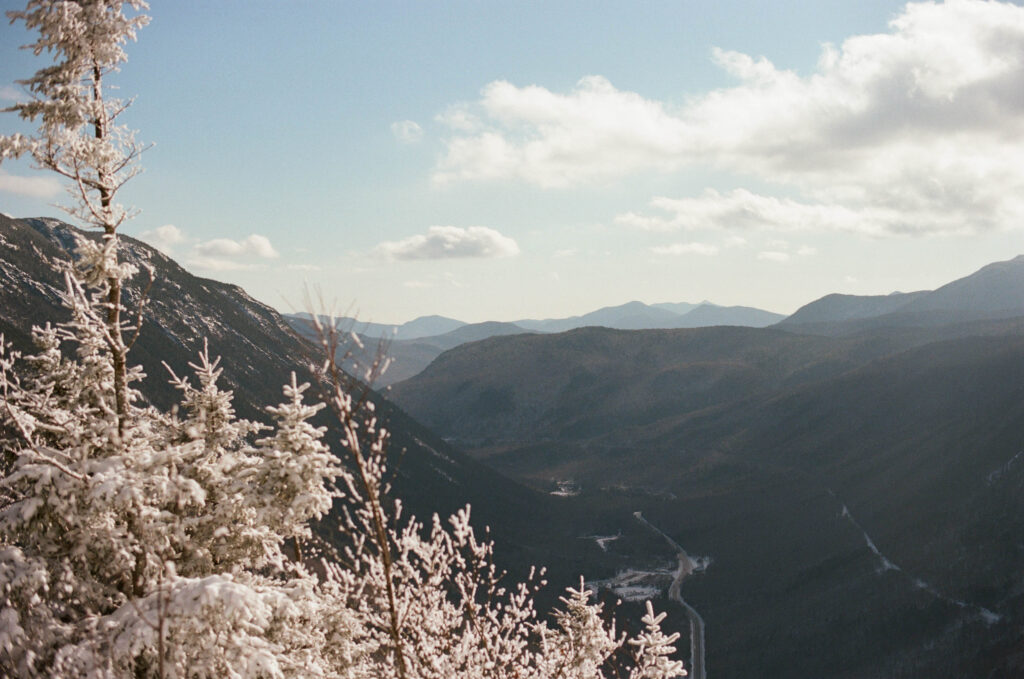
In winter, the summit opens up into a quiet, snow-covered overlook with dramatic views of Crawford Notch. It’s adventurous without being overwhelming, which makes it a great option for couples who want something meaningful, intimate, and still very doable during the colder months.
What to Know Before Winter Hiking in the White Mountains
Winter hiking in the White Mountains is not the same as hiking in warmer seasons. Conditions can change quickly, weather at the trailhead often does not reflect conditions at the summit, and trails can be harder to follow once snow-covered.
Cell service is unreliable, daylight hours are shorter, and cold temperatures raise the stakes if something goes wrong. Preparation is what allows winter hikes and winter proposals to feel calm instead of stressful.
Winter Hiking Checklist for Mount Willard
Even on shorter winter hikes, having the right gear makes a huge difference. This is a solid starting point for Mount Willard and similar White Mountain trails.
- Traction such as microspikes or crampons
- Insulated, waterproof boots
- Moisture-wicking base layers
- Mid-layer for warmth (fleece or light puffy)
- Insulating layer for stops or the summit
- Wind and waterproof outer shell
- Warm hat and gloves or mittens
- Extra socks
- Headlamp (even for daytime hikes)
- Snacks and a warm drink, because your cold water may freeze in your water bottle
- Navigation tools
- Emergency essentials like a small first aid kit, whistle, and bivy
Tips for Hiking Mount Willard in the Winter
One of the biggest winter hiking lessons is learning how to dress properly.
Be bold, start cold.
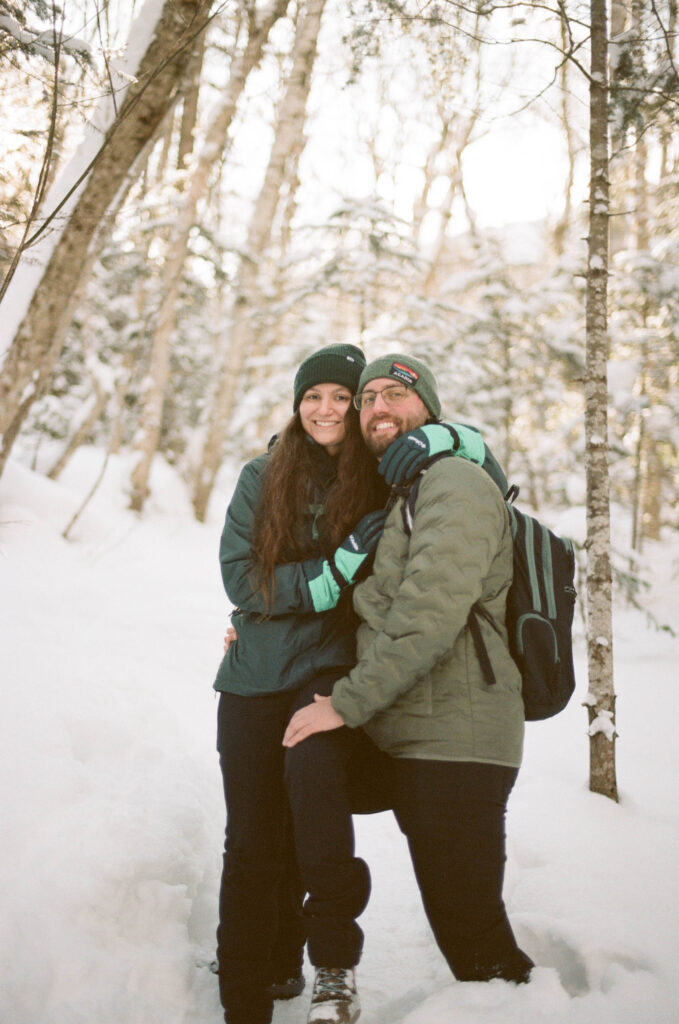
It’s normal to feel a little chilly at the trailhead. Once you start moving, you warm up quickly, even on a relatively short hike like Mount Willard. Wearing too many layers at the beginning often leads to sweating, and getting wet in winter is one of the fastest ways to get dangerously cold.
Start with fewer layers, keep extras in your pack, and add warmth when you stop or reach the summit.
A few more winter-specific tips:
- Start earlier than you think you need to, even for short hikes
- Check Mount Washington weather forecasts, not just nearby towns
- Expect packed snow and icy sections near the top
- Take short breaks and keep moving to regulate body temperature
Knowing When to Turn Around
One of the most important winter hiking skills is knowing when to call it. Turning around is not failure. It’s good decision-making.
Consider heading back if:
- Weather worsens or visibility drops
- Winds increase significantly at higher elevation
- Your traction isn’t sufficient for icy conditions
- Anyone in your group feels cold, exhausted, or uncomfortable
Winter hiking often rewards flexibility. Being willing to adjust plans, whether that means turning around mid-hike or choosing a new day entirely, is part of hiking safely in the White Mountains. The mountain will always be there. A safe hike is always the goal.
The Importance of the New Hampshire Hike Safe Card
If you’re winter hiking in New Hampshire, the Hike Safe Card is essential. It helps cover the cost of search and rescue if something goes wrong and supports the volunteers who keep hikers safe in the White Mountains.
It’s affordable, easy to purchase, and provides peace of mind for winter adventures when conditions are more serious.
A Proposal That Fell Perfectly Into Place
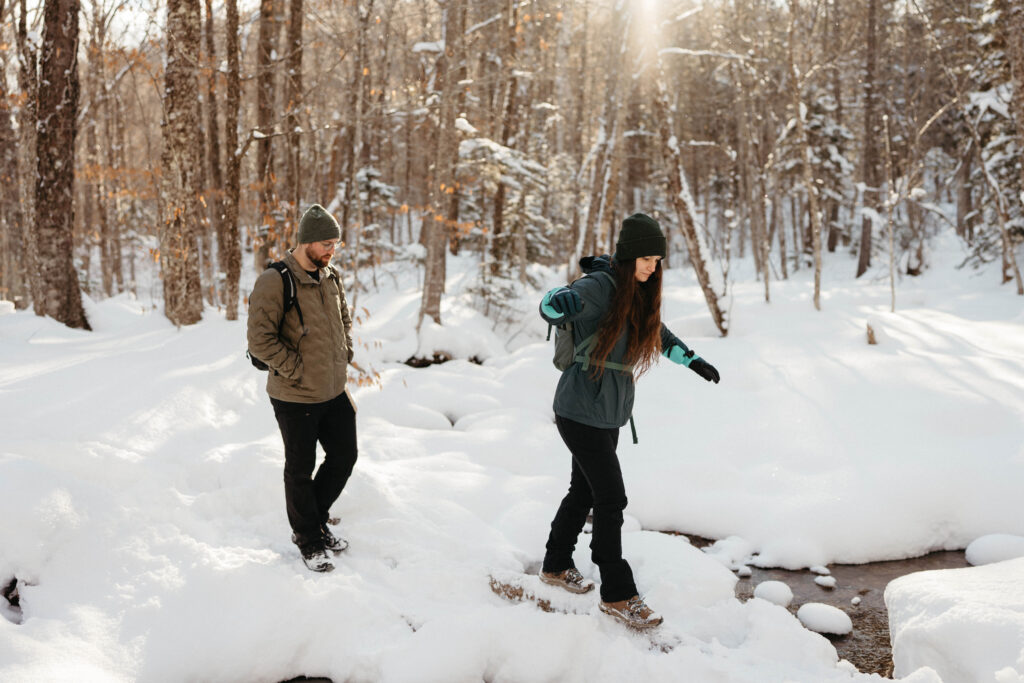
Brooke and Stephen’s Mount Willard proposal felt like one of those days where everything aligned. The cleared skies, the calm summit, the unexpected kindness of a stranger, and the shared excitement on the trail back down made it unforgettable.
Winter hiking asks more of you, but it gives back in equally meaningful ways. With preparation, patience, and respect for the mountains, moments like this can feel even more special.
Planning a Winter Proposal or Elopement in the White Mountains
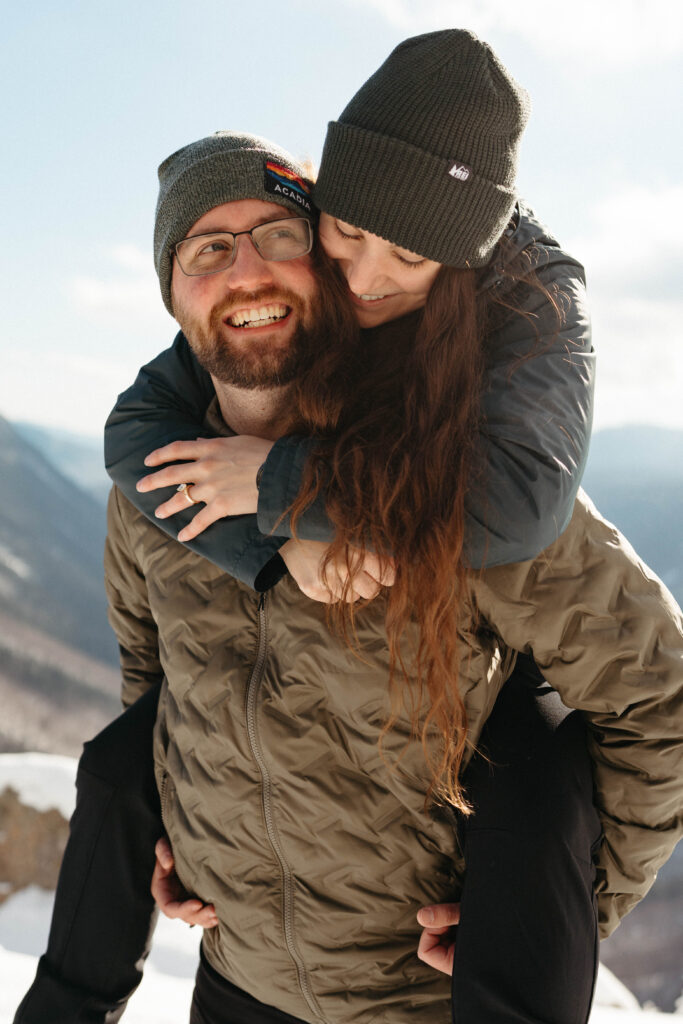
If you’re dreaming of a winter proposal or elopement in the White Mountains, thoughtful planning makes all the difference. From timing and locations to safety considerations and weather backups, having a plan allows you to stay present and enjoy the moment.
If you’re ready to start dreaming something up, I’d love to help you plan!